Vegan Restaurant Franchise in Europe | Green Farmer’s

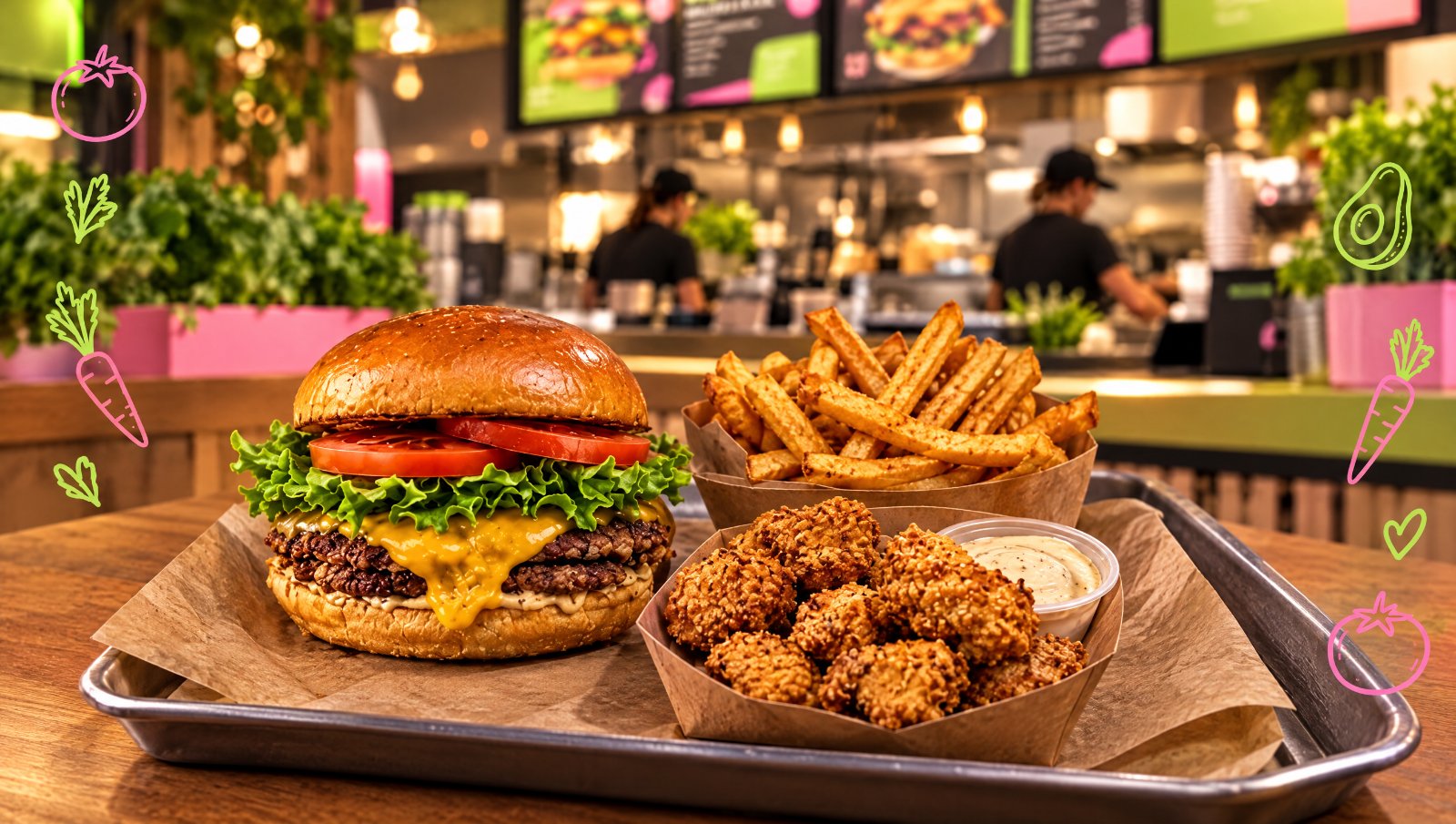
Green Farmer's vegan burger, nuggets and fries on a tray at a street-food restaurant counter

Most people who search for a vegan restaurant franchise are not vegans. They are operators, investors or career-changers comparing fast-food concepts, and « vegan » is one filter among several: cost, margin, speed of opening, how much of the model they will actually control. This page answers those questions for Green Farmer’s, a 100% vegan street-food brand with restaurants in Paris, Ajaccio and Amsterdam.

One point of vocabulary first, since you will see both words. Green Farmer’s operates through a brand licence agreement, not a franchise contract in the strict legal sense. In practice you get the concept, the brand, the supply chain and the training, and we use « franchise » here because it is the word candidates search for. Any question about the legal framework of your contract belongs with a lawyer, and we would rather you ask one than rely on a web page.

Green Farmer's vegan burger, nuggets and fries on a tray at a street-food restaurant counter
The Green Farmer’s vegan street-food concept

What the concept actually is

Green Farmer’s sells burgers, wraps, bowls and fried sides, all plant-based, in a fast-food format. The menu is built on the brand’s own product line, No Meat: steaks, nuggets, tenders, wings, schnitzel, falafel and a plant-based cheddar. Having a proprietary range matters for an operator, because it fixes both the taste and the cost of the products that make up most of the menu.

The customer base is wider than the label suggests. Most guests are flexitarians or simply curious, and the Dutch figures show why that is a sound bet: according to Statistics Netherlands (CBS), 25% of main meals eaten in the Netherlands in 2023 were vegetarian, and about 22% of the Dutch eat a main meal without meat or fish at least three days a week (the flexitarians), against roughly 0.5% who eat fully plant-based. The addressable market is the people who occasionally choose not to eat meat, not the small group who never do.

A caution on market data, because it cuts both ways. GFI Europe puts plant-based retail sales across six major European markets at €5.4 billion in 2023, but growth was uneven: Germany led, while sales declined in the Netherlands and the UK. Supermarket plant-based substitutes and restaurant demand are not the same market, and we would not sell you one as proof of the other. What the numbers do show is that this is a mainstream category, not a niche, and that execution decides who wins.

Proof the format works before you invest

The network today is Paris 09 (the flagship), Paris 11, Ajaccio and Amsterdam, the first location outside France. New openings are planned in Paris, the Netherlands and Belgium. Customer ratings, as of the March 2026 brand catalogue, stand at 4.8/5 on Google (1,000+ reviews), 4.8/5 on Uber Eats (6,000+ reviews), 4.8/5 on Deliveroo (500+ reviews) and 5/5 on TripAdvisor, where the Paris restaurant ranks in the top 20 of more than 20,000 establishments.

The business is also a delivery business, which is worth knowing before you sign a lease. Roughly 40–45% of revenue comes from on-site dining, 20–25% from takeaway and 35–40% from delivery, about 90% of it through platforms. That split is worth weighing when you choose a site, since delivery coverage matters as much as footfall.

The numbers, as the brand presents them

These are the company’s estimates and ranges, not guarantees. Your own results depend on location, rent, staffing and how closely you run the model.

  • Total investment: €100,000 to €250,000, depending on the site and its condition.
  • Personal contribution: €30,000 to €50,000, with the balance usually financed (we cover the mechanics in our financing guide, in French).
  • Fit-out: €10,000 to €35,000. Kitchen equipment: €20,000 to €40,000; professional extraction is non-negotiable.
  • Training fee: €2,000 to €10,000 depending on zone and profile.
  • Floor area: 50 to 150 m².
  • Royalties and mandatory marketing fees: none. Whether an entry fee applies depends on the offer; the details are in our page on the no-entry-fee option (in French).

On the revenue side, a unit averages more than 3,500 orders a month, with an average basket of €28 for delivery and €17 for takeaway. Average gross margin is x4. At maturity, in year three, the brand estimates revenue of about €1,000,000 and EBITDA of €150,000 to €200,000 (15–20% of revenue), with a return on investment in two to three years.

The zero-royalty point deserves a second look from anyone comparing concepts. A percentage of turnover paid every month to the brand is the single biggest difference in the long-run economics of two otherwise similar offers, and it is worth putting both side by side in a spreadsheet. Our page on the royalty-free model (in French) goes through that comparison.

Who the brand looks for

Restaurant experience helps but is not required; training covers the operating side. What matters more is the ability to manage a small team and stay close to the numbers.

The team behind the brand is four people. Olivier Sarfati is an entrepreneur and head of the Jwell group, which runs more than 100 retail points of sale. Dan Benhaim is a restaurateur with 30 years of experience who developed the Folies Café in Paris. Manuel Gonzalez leads international development with 20 years in the field, and Cyrille Durand, a product design and brand specialist with 20 years of experience, shapes the identity and the product.

From application to opening

Expect three to six months between your application and opening day, depending on how fast the site, financing and fit-out come together. The sequence, and where candidates typically lose time, is described in our article on the application-to-opening timeline (in French).

If you are looking at the Benelux, the two markets there have their own pages: the Netherlands and Brussels. For the full overview of the model in one place, start with the main page on the vegan restaurant franchise, and for how the brand licence differs from a classic franchise contract, read our explainer on the licence (both in French).

Frequently asked questions

Do I need to be vegan to run a Green Farmer’s?

No. Most customers are flexitarians, and many operators are not vegan themselves. What you need is conviction in the format and the discipline to run a fast-food kitchen.

How much does it cost to open a unit?

The brand’s range is €100,000 to €250,000 in total investment, with a personal contribution of €30,000 to €50,000. The spread comes mostly from the site: fit-out runs €10,000 to €35,000 and kitchen equipment €20,000 to €40,000.

Are there royalties?

No. Green Farmer’s charges no royalties and no mandatory marketing fees. Training is charged separately, between €2,000 and €10,000 depending on zone and profile.

Is this a franchise or a licence?

It is a brand licence agreement. The operator experience is close to a franchise (concept, brand, training, support), but the legal framework differs, and a lawyer should review any contract before you sign.

How long does it take to open?

Three to six months from application to opening, depending mostly on finding the site and closing the financing.

How long before the investment pays back?

The brand estimates two to three years, based on year-three revenue of around €1,000,000 and an EBITDA of 15–20%. Treat this as a target to test against your own rent and payroll assumptions, not a promise.

Can I open outside France?

Yes. Amsterdam is already open, and new locations are planned in the Netherlands and Belgium. Contact us with your target city to check whether the zone is available.

Ouvrir un restaurant vegan : ce qui change vraiment

Burger vegan sur le comptoir d’un restaurant vegan à cuisine ouverte, entouré de légumes frais : ouvrir un restaurant vegan

Ouvrir un restaurant vegan, c’est d’abord ouvrir un restaurant. Pourtant, beaucoup de candidats l’oublient. Ils cherchent un fournisseur de « steaks végétaux » avant d’avoir regardé le flux de passage du local. Ils débattent de la carte avant de chiffrer le loyer. Le végétal change bien des choses, mais moins qu’on ne l’imagine. C’est dans … Ouvrir un restaurant vegan : ce qui change vraiment